
Past and Present American Presidents Ranked by IQ
26. George H.W. Bush – IQ score: 130.13
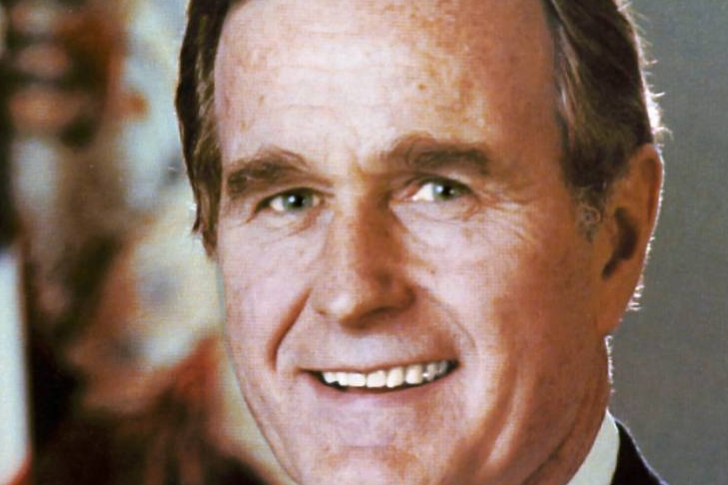
Before claiming the Oval Office as the 41st U.S. president (1989–1993), George H.W. Bush built a political résumé as layered as a Russian nesting doll. From U.N. ambassador to congressman to Republican National Committee chair, he mastered every role with the finesse of a diplomatic tightrope walker. But beyond his resume, Bush Sr.’s true legacy lies in his obsession with connections—a relentless bridge-builder who turned handshakes into alliances, crafting a playbook for relationship-building that’s still studied today.
As president, this deal-making prowess shaped history: He navigated the peaceful end of the Cold War, witnessed the Berlin Wall’s symbolic collapse, and laid the groundwork for NAFTA—a visionary trade pact binding North America. Yet it’s his human touch that resonates: the leader who wrote 1,000+ personal notes annually, remembered staffers’ birthdays, and treated geopolitics like a cocktail party where everyone got a seat. For modern professionals? Bush’s blend of grit, grace, and “never eat alone” philosophy remains the ultimate masterclass in principled yet pragmatic leadership.
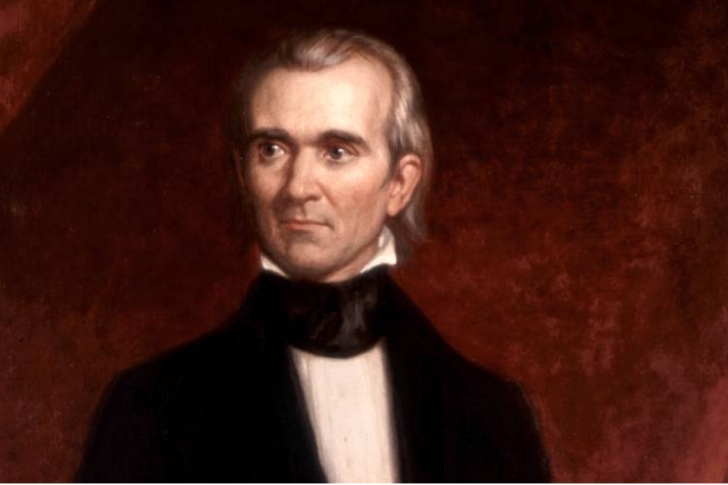
25. James K. Polk – IQ score: 130.2
Decades before becoming America’s 25th president (1897–1901), William McKinley cut his teeth as a young Union officer under future president Rutherford B. Hayes during the Civil War—proving that mentorship can literally shape history. Their bond, forged in the chaos of war, evolved into a political powerhouse duo. Hayes, later the 19th president, became McKinley’s career catapult, offering guidance that transformed the ambitious soldier into a legislative strategist and eventual commander-in-chief. Talk about networking goals: This apprentice-to-master pipeline produced two Oval Office residents!
As president, McKinley leveraged Hayes’ lessons in pragmatism to steer the nation into a new era. His administration boomed the economy through protective tariffs and gold-standard policies, while imperial ambitions soared: The swift victory in the Spanish-American War (1898) netted Puerto Rico, Guam, and the Philippines, and he annexed Hawaii—a controversial move that expanded U.S. global reach. Yet his “prosperity presidency” met a grim end in 1901 when anarchist Leon Czolgosz assassinated him, cutting short a tenure that blended ambition, expansionism, and the quiet power of having a mentor who’d already walked the path. History remembers McKinley not just for his triumphs, but for proving that great leaders are often built by greater teachers.